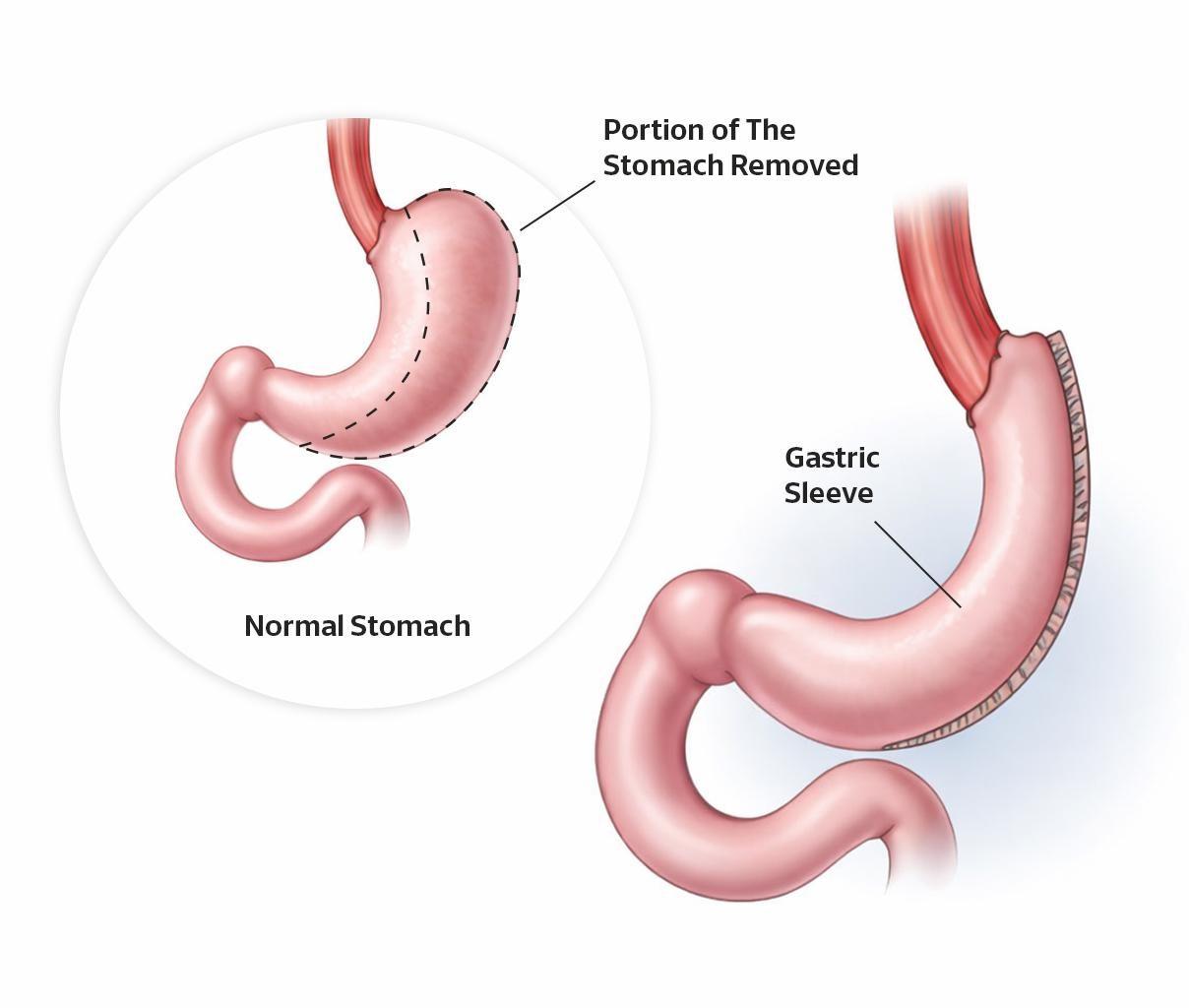
In a sleeve gastrectomy, the larger, stretchy part of the stomach is removed through small keyhole incisions. The banana-shaped stomach that remains holds far less food, so you feel full sooner.
Removing this part of the stomach also lowers ghrelin, the hormone that drives hunger. This is why most patients feel noticeably less hungry after surgery, not just more limited in portion size.
Who is it for?
- BMI of 37.5 or more, or 32.5 or more with obesity-related conditions (Asian-Indian criteria)
- Patients who want an effective operation without rerouting the intestine
- Selected adolescents and complex cases, after thorough assessment
How it's done
- Performed under general anaesthesia through 4–5 small incisions
- A calibration tube guides the surgeon in shaping a uniform sleeve
- The removed portion of stomach is taken out; the staple line is checked for leaks
- Typical operating time is about an hour to an hour and a half
Recovery & life after
- Walking the same evening or the next morning
- Clear liquids, then a staged diet from purées to soft to normal food over 4–6 weeks
- Lifelong vitamin and mineral supplements and regular follow-up
Risks
As with any major surgery, risks include bleeding, leak from the staple line, blood clots, reflux and nutritional deficiencies. Dr. Borude will discuss your individual risk in detail.
Results vary between individuals. This page is general information and isn't a substitute for a personal consultation.